Fence Cleaning
Wood, vinyl, and composite fences cleaned at the right pressure. Gray oxidation off the boards, green algae off the panels, and the plants along the fence line kept safe.
Google Rating
Five-Star Reviews
Locally Owned
Low pressure on wood. The right detergent on vinyl.
A fence takes more abuse than any other wood on the property. It has no roof over it, it gets sun on one face and shade on the other, and the bottom rail sits close enough to the ground that every rainstorm splashes soil back onto it. That is why the side you never look at is almost always the dirty one.
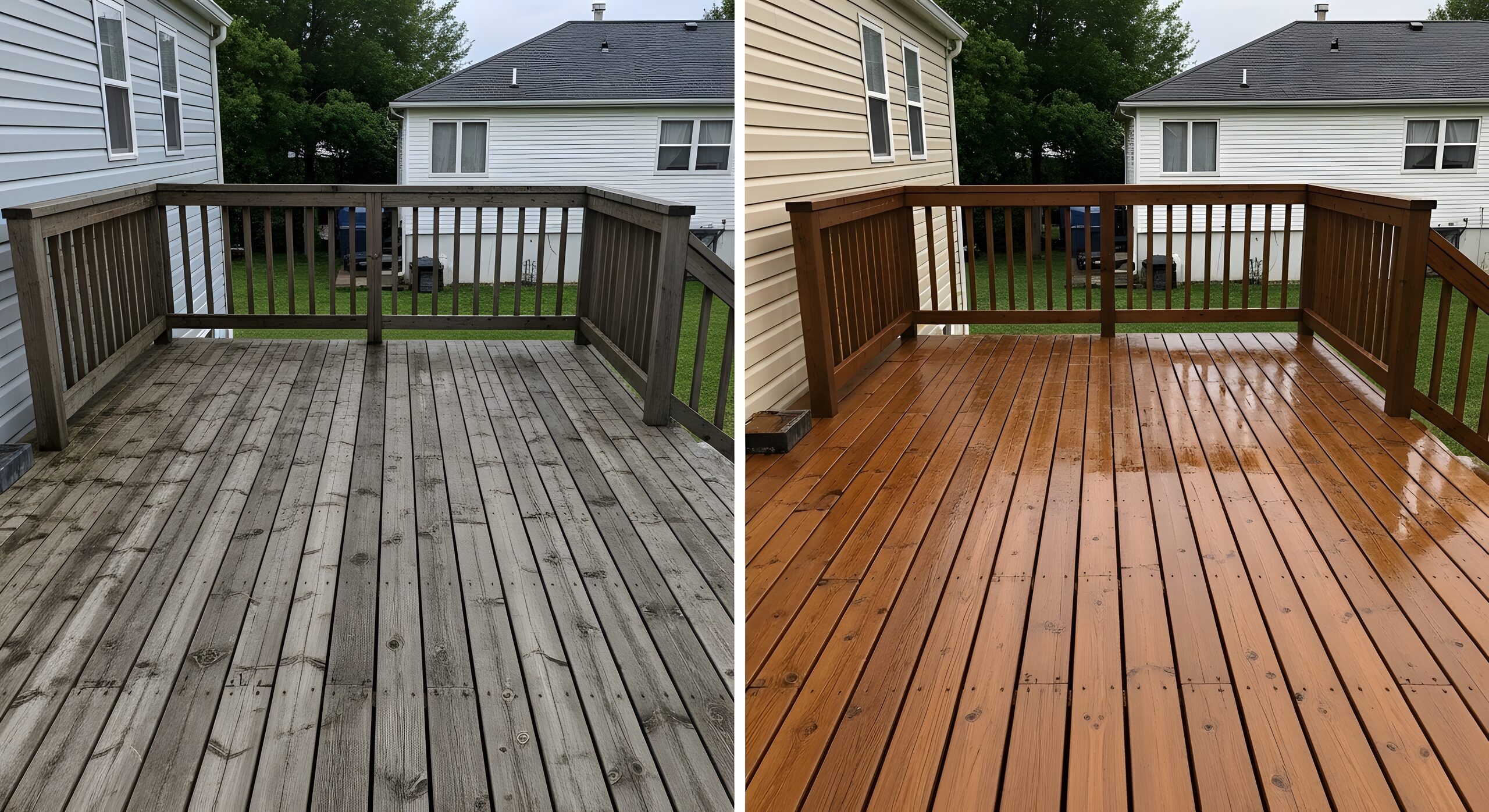
Wood goes gray from UV oxidation, and that gray is a thin dead layer sitting on top of sound wood. High pressure does strip it, but it strips it by tearing up the fibers underneath, and a furred board holds dirt worse than it did before. We use a sodium percarbonate brightener at low pressure instead. The chemistry lifts the gray, the water only rinses, and the grain stays closed.
Pressure-treated pine is the most common fence out here and the most dramatic to clean, because the green tint and the gray layer both come off and the wood underneath is still bright. Cedar needs a gentler mix. It carries natural oils that give it rot resistance, and a harsh cleaner takes those off along with the dirt.
Vinyl is the opposite problem. The green film on a vinyl panel is algae, not staining, and it comes off with a soft wash detergent at garden hose pressure. What you avoid is forcing water into the seams and behind the post caps, which is exactly what happens when someone puts a wand on it. Composite gets a composite-safe cleaner, because the wrong one hazes the cap layer and that does not come back.
Two local things drive most of the fence work we do. Post-and-rail and painted board fence is everywhere around Pomfret and Woodstock, and paddock fence greens up on the shaded runs faster than anything else because the grass grows right up against it and never lets it dry. And any fence along a road picks up sand and salt spray all winter, which shows in spring as a gray band across the bottom third of the traffic side.


Fences we clean.
We match the method to the material, brightener for wood, soft wash for vinyl and composite.
- Pressure-treated pine, brightens dramatically
- Cedar fencing, cleaner matched to cedar's natural oils
- Vinyl and PVC fencing, soft washed panel by panel
- Composite fencing, composite-safe detergent
- Painted and stained fences, test patch first, gentle method
- Post-and-rail and painted board fence, including long paddock runs
- Both sides cleaned, gates and hardware rinsed
- Plants and beds along the fence line pre-rinsed and protected
Both faces get cleaned, not just the one you look at. Gates get the hardware rinsed and the latch checked, because a gate that has stopped closing cleanly usually just needs the grit out of the strike. Beds along the fence line get soaked before we start and rinsed again on the way out, which matters more here than on a house, since the planting is usually right up against the boards.
If you are staining or sealing afterward, this is the prep, and the timing is the part people get wrong. Wood needs two dry days before a finish goes on, longer after a humid stretch. Seal a board with moisture still in it and the finish will not hold. We schedule around your stainer so that does not happen.
Most residential fence cleaning runs $175 to $450 depending on linear footage, material, and how much of the run sits in shade. Long paddock and post-and-rail fence gets quoted by the foot. Send two or three photos to (860) 553-9326, one of them from the shady side, and we will send a flat price back the same day.
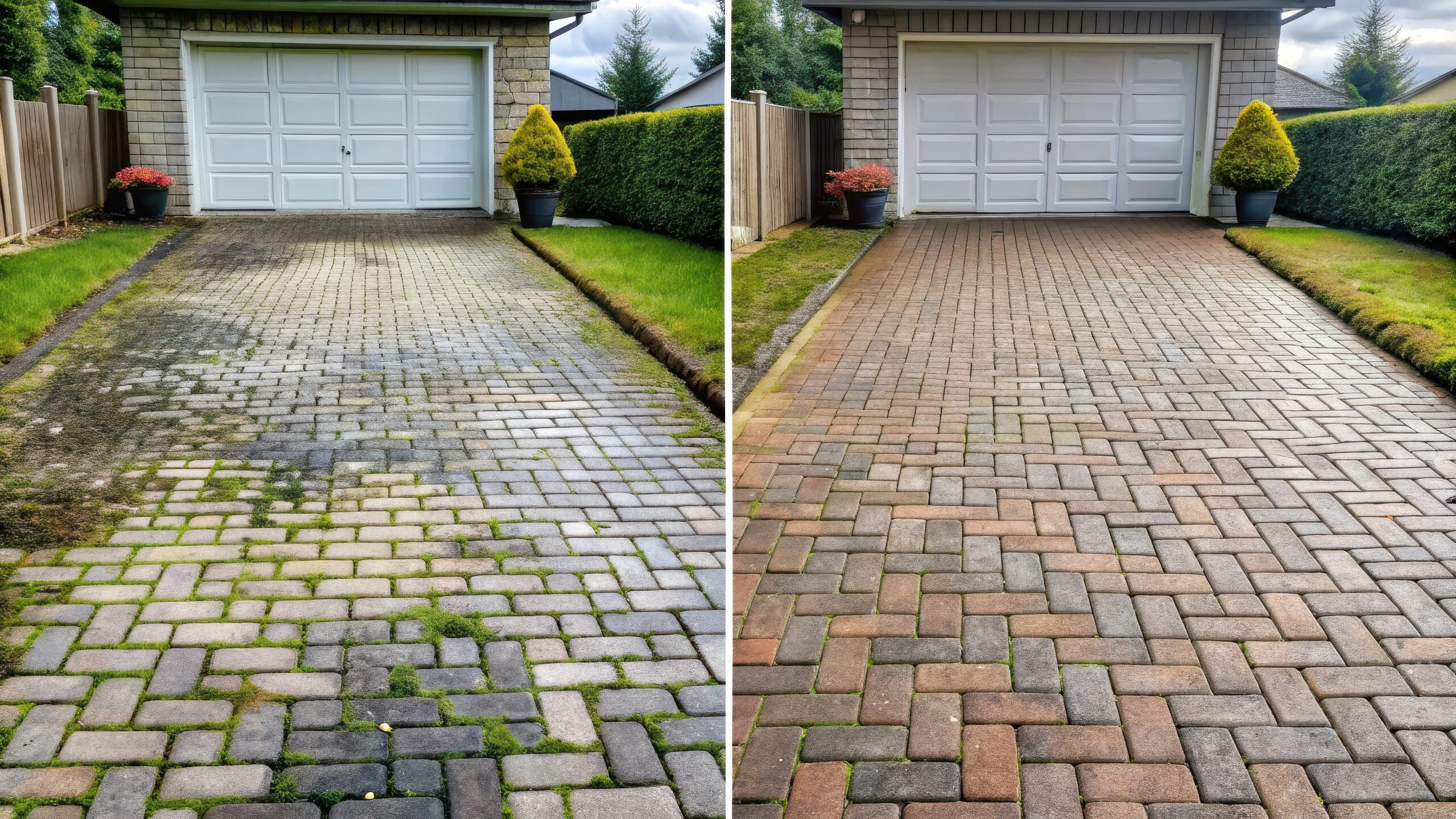
Fence work pairs well with the rest of the yard. Wood fence and a wood deck take the same brightener, so booking deck and patio cleaning on the same visit costs less than two separate trips. If the fence has gone green, the shaded wall of the house almost always has too, which is a house washing job. Our full coverage map is on the service areas page.
Other Services We Offer
Pressure washing isn't the only thing we do. From roof to driveway, every exterior surface, done by the same team you're already considering.



Four things we do differently
365-Day Guarantee
We stand by our work. If algae or growth returns within 365 days, we come back and fix it at no charge.
Owners on Every Job
Applewood is run by two Pomfret natives, friends since elementary school. One of us is on site for every job, not a rotating crew.
2-Step Power Washing System
First we apply manufacturer-approved detergents that kill mold and algae at the root. Then we rinse with controlled pressure that protects surfaces. That's how we get results that actually last.
Fully Licensed & Insured
General liability and workers' comp on every job. Certificate of insurance on request. Plant-safe soft wash, owner-operated on every job.
What Connecticut Homeowners Are Saying
Real reviews from real neighbors. See what families and property managers say after we've cleaned their property.

FAQs
Common questions about cleaning wood, vinyl, composite, and painted fences. Don't see yours? Send us a photo.
Soft washing uses low water pressure (about the same as your garden hose) and a biodegradable detergent, the chemistry does the cleaning. Pressure washing uses high water pressure with no detergent. Soft wash for siding, roofs, painted surfaces, and anything porous. Pressure wash for concrete driveways, brick pavers, and stone. We pick the right method per surface.
Pricing is based on linear footage, the fence material, and how much gray oxidation or green algae has built up. The cleanest way to get a number is to text us a few photos and the approximate length, and we'll send a flat quote, usually within an hour.
Yes. Detergents are biodegradable and rinse out at low concentration. We wet down landscaping before applying anything and rinse again when we finish. We've never lost a plant. Tell us about anything specific you're worried about when you book.
Yes. We clean wood, vinyl, composite, and aluminum fencing. Each material gets a different approach: low pressure and the right detergent on wood so we don't fuzz the grain, and a detergent soft wash on vinyl and composite to lift algae without etching the surface.
It depends on the material. Wood and vinyl are cleaned with a low-pressure soft wash, the detergent does the work, so we don't gouge boards or drive water behind panels. Heavier buildup on composite or aluminum may take a controlled pressure rinse. We match the method to the surface.
No. Our detergents are biodegradable and we wet down the plants and grass along the fence line before we start, then rinse again when we finish. Let us know about anything delicate near the fence when you book and we'll take extra care around it.
Still have questions?
Text us a few photos and we'll send a flat quote, usually within an hour.
Let's make your house
look like new.
Text us a few photos and we'll send back a flat quote within the hour. We're booking the 2026 season now, and Saturdays fill first.