
Commercial Window Cleaning: Frequency, Methods, and Cost

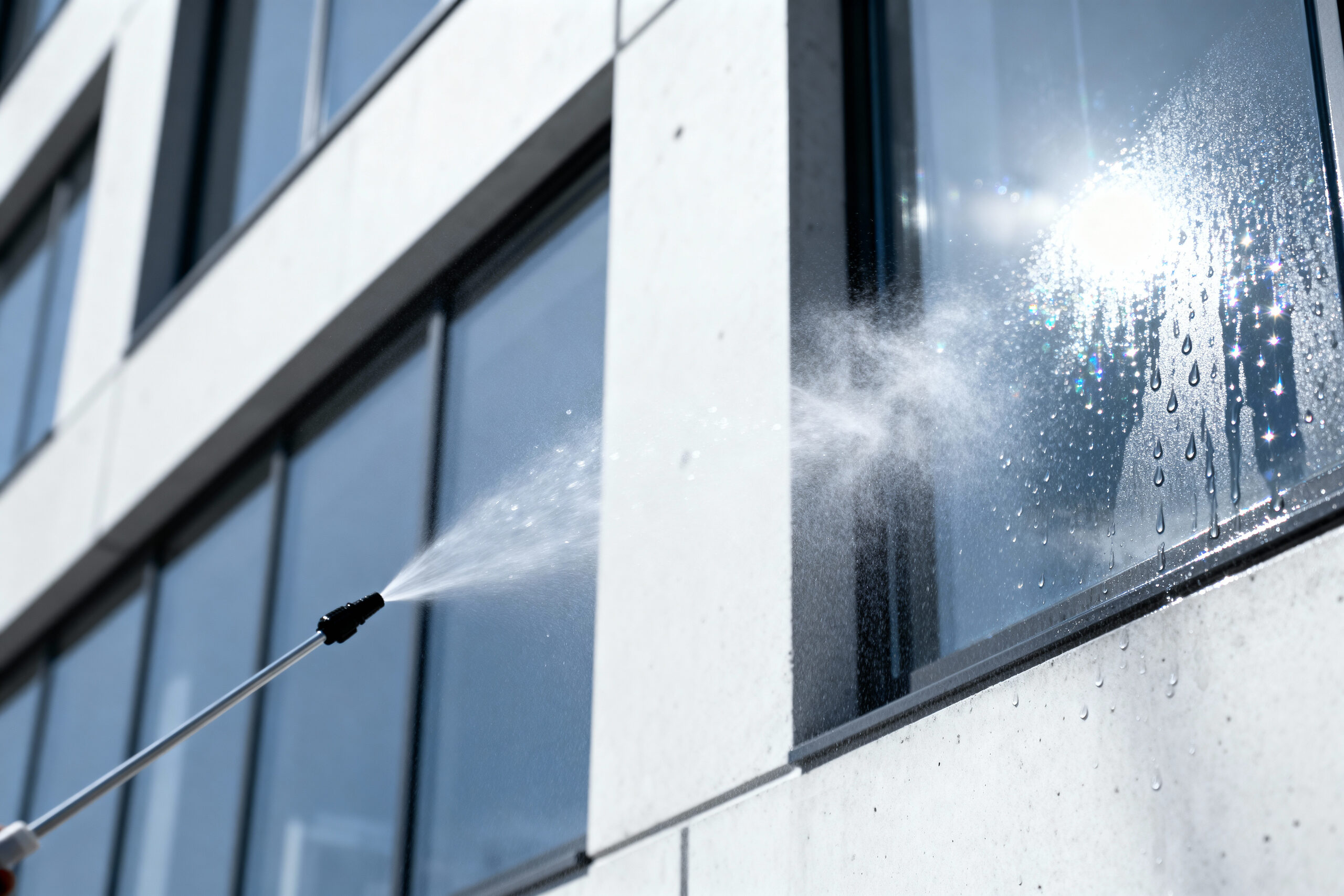
What commercial window cleaning costs
Our window cleaning is $8 per pane with a $200 minimum. That pricing is the same whether it is a house or a storefront, which makes budgeting straightforward: count the panes, multiply, and that is the number.
A pane means a single piece of glass, not a whole window unit. A six-over-six double hung counts differently than a single sheet of storefront plate glass, and a standard retail bay with a door and two flanking lights is usually a handful of panes, not one. If you are not sure how to count yours, send photos and we will count them for you.
A few things worth knowing before you compare quotes:
- Interior and exterior are counted separately. Cleaning both sides of a pane is two passes and two prices.
- The $200 minimum means a very small storefront pays the minimum rather than a per-pane total. It covers getting a truck, water, and two people to your address.
- Regular route work costs less per visit than a one-off rescue clean, because there is less on the glass each time.
How often does commercial glass need cleaning?
There is no single right answer. It depends on foot traffic, how close the glass sits to a road or parking lot, and how much of your first impression is made through the window.
Retail, restaurants, and cafes
Every two weeks to monthly. Entrance glass takes hand prints all day, and in a restaurant you are adding cooking film on the inside and road grit on the outside. Anywhere customers stand at the glass and look in, this is the frequency that keeps it looking open rather than tired.
Retail centers and multi-tenant plazas
Monthly is the common schedule for a plaza, usually managed as one job across all the tenants. It costs each tenant far less than each of them hiring separately, and it keeps the whole property looking consistent, which is what the anchor tenant and the leasing agent care about.
Offices and professional buildings
Quarterly for the exterior, twice a year for the interior, is enough for most office glass. Ground floor entrances usually need more attention than the upper floors.
Medical, dental, and veterinary
Monthly. Waiting-room glass is part of how people judge whether a practice is clean, fairly or not.
Auto dealers, banks, gyms, and showrooms
Every two weeks to monthly. Showroom glass is doing a job. If it is filmed over, everything behind it looks worse than it is.
Why storefront glass gets dirty so much faster than a house window
Homeowners are often surprised by how quickly commercial glass goes off. The reasons are specific.
- Hands. Every door pull, every kid leaning on the display glass, every delivery driver pushing the door with a full box.
- Parking lot grit. Cars kick up a fine dust that lands on glass all day, and rain turns it into a film rather than washing it off.
- Road salt. This is a Northeast Connecticut problem in particular. From December through March, salt spray from the road and the plow lands on the lower half of every storefront and dries into a haze that regular squeegee work has to fight.
- Sidewalk splash. Rain bouncing off the walk throws dirt onto the bottom two feet of glass, which is exactly where customers look.
- Exhaust and cooking film. Drive-through lanes and restaurant vents lay down a greasy layer that plain water does not touch.
Water-fed pole versus traditional squeegee
Both methods are legitimate. The right one depends on the glass.
Traditional squeegee work
Soap, scrubber, squeegee, detail cloth. It is still the best method for interior glass, ground floor storefront, and anything with heavy build-up that needs a blade to break it loose. It is also the only option indoors, where you cannot spray water freely.
Water-fed pole with purified water
A water-fed pole runs water through filters that strip out the dissolved minerals, then feeds it up a carbon fiber pole to a brush at the top. The brush agitates the glass, the purified water rinses, and because there are no minerals in the water, it dries with nothing left behind. No squeegee, no detailing, no spots.
The advantages on a commercial building are real. It reaches two and three stories from the ground, so nobody is setting a ladder over a public sidewalk. It cleans the frames and sills as it goes, not just the glass. It is faster on large areas of uninterrupted glass. And it means fewer ladders, fewer cones, and less disruption to whatever is happening at your entrance.
Hard water spots and what to do about them
The most common complaint we hear from property managers is glass that will not come clean no matter who cleans it. That is usually mineral deposit, and the culprit is almost always irrigation. A sprinkler head aimed slightly wrong throws well water onto the glass, the water evaporates, and the calcium stays. Do that a few hundred times and the deposit bonds to the surface.
Two things to know. First, once mineral has etched the glass, standard cleaning will not remove it. It needs a restoration treatment, which is a separate job priced separately. Second, and more useful: fix the sprinkler head. Otherwise you are paying to restore the same panes every year. The same goes for downspouts that splash onto glass and for runoff off an unsealed concrete walk.
Scheduling around a business that has to stay open
Nobody wants a bucket in their doorway during lunch rush. Practical options:
- Before opening. We start at 7am, so a storefront can be finished before the doors open for the day.
- After close. We work until 7pm Monday through Saturday.
- A fixed route day. Same day each month means your staff know it is happening and you stop thinking about it.
One more thing property managers should insist on: a certificate of insurance before anyone works on your property. We carry general liability and workers comp and send the COI before work starts, without being chased for it.
What to ask before you sign anything
- Is the price per pane or per window, and what counts as a pane?
- Are frames, sills, and tracks included or is it glass only?
- Is interior included in the number, or is that separate?
- Who is liable if a pane is scratched, and can I see the COI?
- Is there a contract, or can I book visit by visit?
Book a walkthrough
Applewood Exterior Cleaning handles commercial window cleaning for storefronts, plazas, offices, and multi-tenant retail across Northeast Connecticut, Worcester and Middlesex counties in Massachusetts, and Rhode Island. The full list is on our service areas page.
We are owner-operated, two of us, both from Pomfret, and one owner is on every job. That matters more on commercial work than most people expect, because you are dealing with the person who quoted the job rather than a dispatcher.
Glass is usually only part of it. Most of our commercial customers add entrance concrete and sidewalks, awnings, and building washing on the same visit. You can see the range on our commercial services page and our concrete cleaning page. Residential glass is priced the same way and is covered on our window cleaning page.
Text 2 or 3 photos of your storefront to (860) 553-9326 and we will send a flat quote back, usually within the hour.